
BPO vs In House Teams: What Is the Difference?
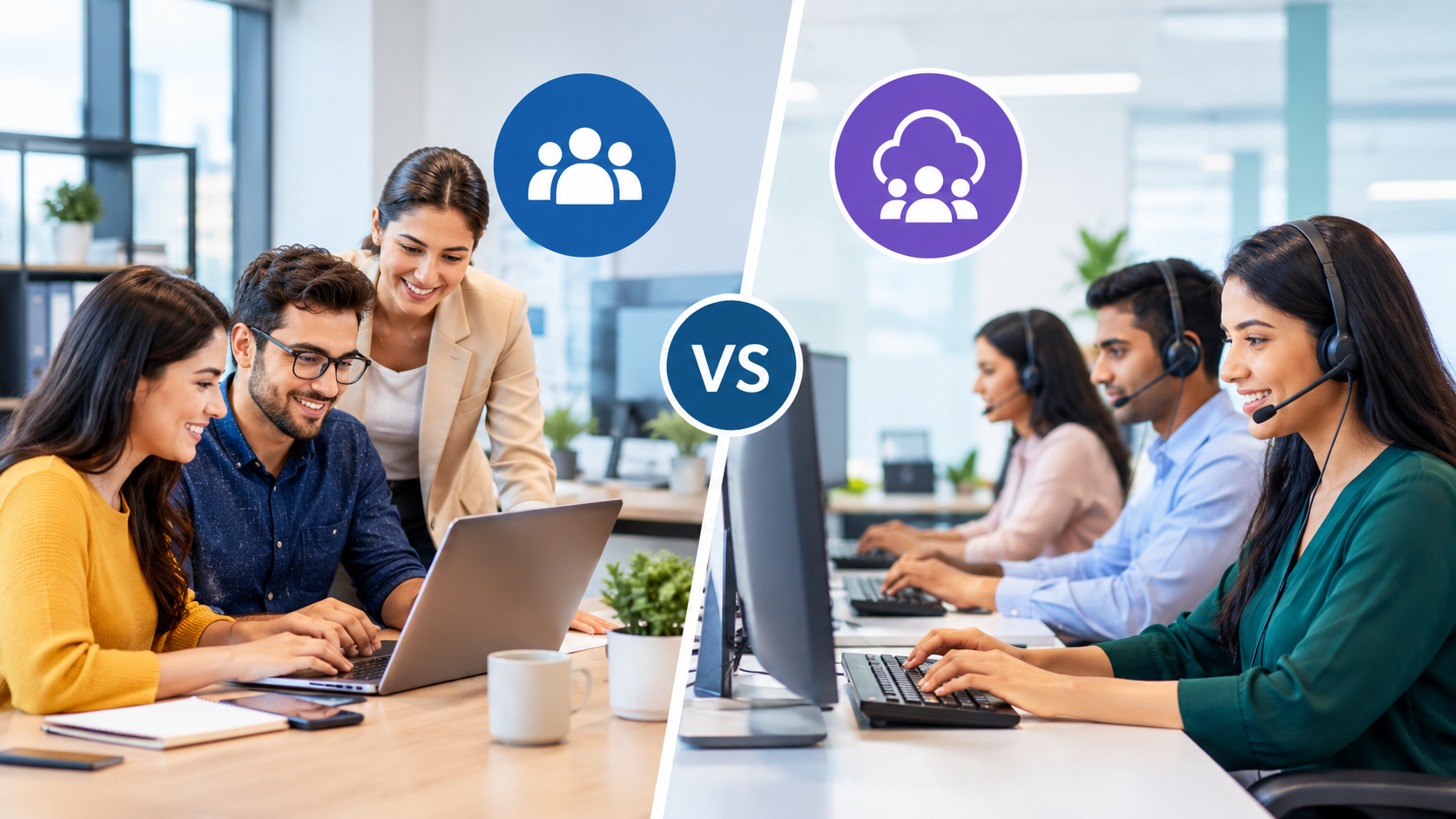
Choosing between an internal team and an external service model can affect how a company manages daily operations, customer interactions, staffing, training, and business growth. Both approaches can support different business needs, but they operate under different structures.
An in-house team consists of employees hired and managed directly by the company. A BPO model involves assigning an agreed business process or function to an external provider under defined responsibilities, workflows, service requirements, and performance measures.
TNA Global Company provides outsourced operational support across specialized insurance and restoration services, sales development, customer service, administrative, and back-office functions. The appropriate operating model depends on factors such as workload, business goals, customer expectations, available resources, and the level of management involvement required.
What Is the Difference Between BPO and In-House Teams?
BPO and in-house teams can both support important business functions, but the operating models are different.
An in-house team consists of employees hired and managed directly by the company. The business generally manages recruitment, employee development, daily supervision, internal processes, and workplace policies.
BPO involves assigning an agreed business process or function to an external provider. Depending on the engagement, the provider may supply staff and handle certain workforce or operational responsibilities, while some responsibilities may remain with the client or be shared between both parties.
The main difference is not simply who employs the people doing the work. It is how the business process, responsibilities, workflows, service requirements, and performance measures are structured between the company and the provider.
In-house teams are directly employed by the business.
BPO assigns defined processes or functions to an external provider.
Internal managers have direct responsibility for day-to-day team management.
BPO responsibilities are governed through an agreed client-provider operating model.
Both models can support customer service, administration, sales, and back-office functions.
The appropriate structure depends on what a business needs and which responsibilities it wants to retain or delegate.
How Do BPO and In-House Teams Work?
Understanding how each model operates makes the comparison easier. An internal team usually starts with hiring employees for specific roles and building the required systems around them.
The company is responsible for recruitment, onboarding, training, payroll, performance management, equipment, and workplace policies. This gives the business direct involvement in everyday operations.
With business process outsourcing, specific functions are assigned to an external provider under agreed requirements. Depending on the engagement, the provider may handle recruitment, workforce management, training support, scheduling, and other agreed operational responsibilities.
The client may continue to manage certain business decisions, processes, approvals, or performance requirements. The exact division of responsibilities depends on the BPO engagement.
Internal employees usually follow company-controlled processes and policies.
External teams work according to agreed service requirements and performance measures.
Businesses can keep sensitive or strategic functions internally.
Routine, high-volume, or specialized operational functions can also be supported externally when appropriate.
Both models can use technology to track quality and performance.
For example, a growing online retailer may keep product management and strategy internal while using an external team to manage customer enquiries during busy periods.
What Are the Main Differences to Consider?
The differences between the two models go beyond where employees work. Businesses should consider management responsibility, flexibility, recruitment, training, technology, scalability, and operational control.
An internal structure can provide direct visibility because managers work directly with employees. However, it also means the business takes responsibility for the employment process and related workforce management.
With a BPO model, a company can assign selected operational responsibilities to an external provider. Depending on the provider and engagement, this may offer greater staffing flexibility when workloads change.
BPO vs In-House Teams Comparison
| Factor | In-House Teams | BPO Teams |
|---|---|---|
| Recruitment | Managed directly by the company | May be handled by the provider, depending on the engagement |
| Training | Company responsibility | May be supported by the provider or shared with the client |
| Workforce Management | Direct internal management | Governed through the agreed client-provider operating model |
| Scalability | May require additional hiring | May offer greater staffing flexibility depending on the provider and engagement |
| Control | Direct internal management | Governed through agreed responsibilities and processes |
| Technology | Company provides required systems | Provider may supply supporting infrastructure depending on the engagement |
| Workload Changes | Staffing adjustments may require internal hiring or reassignment | External capacity may provide additional flexibility depending on the provider |
| Management Effort | Higher internal involvement | Some responsibilities may shift to the provider |
| Process Ownership | Company owns and manages the process | Responsibilities are defined through the client-provider agreement |
When Does Each Team Model Make Sense?
The appropriate model often depends on the stage of the business and the type of work involved. Some companies need close control over every customer interaction, while others need additional capacity without expanding their internal workforce.
An in-house approach can be useful when a function is closely connected to company culture, confidential information, product development, or long-term strategic planning.
External support may be useful when the work is repetitive, requires extended coverage, involves changing demand, or needs additional operational capacity that the company does not currently have internally.
Choose internal staffing when direct oversight and internal ownership are important.
Consider external support when workload requirements change or additional capacity is needed.
Keep highly strategic functions close to the core business when appropriate.
Use external specialists for selected operational activities when the engagement supports the business requirements.
Combine both approaches when different functions have different needs.
A blended approach can give companies internal control over important functions while adding external capacity where it makes practical sense.
What Are the Benefits and Challenges?
Both structures come with trade-offs. Looking only at potential advantages can make the decision seem simpler than it is, so businesses should also consider the responsibilities and challenges associated with each model.
Internal teams can provide direct communication and supervision. Employees may also develop a deeper understanding of company values, products, and long-term goals.
External teams may provide access to trained staff, established processes, and additional operational capacity. At the same time, businesses need clear communication, defined responsibilities, and agreed service expectations to maintain consistency.
In-House Benefits
An internal workforce can create a strong connection between employees and the wider organization. Managers can communicate changes directly and monitor work closely.
Direct control over recruitment and training.
Close connection with company culture.
Immediate access to internal managers and teams.
Direct involvement in daily processes.
Direct ownership of employee development.
BPO Benefits
External service providers may help businesses add operational capacity without requiring the company to manage every staffing task internally. Depending on the provider and engagement, this can be useful for companies dealing with seasonal demand, changing workloads, or specialized operational requirements.
Additional workforce capacity without direct recruitment for every role.
Access to trained teams and established processes.
Potential staffing flexibility depending on the provider and engagement.
Support for extended operating hours where available and agreed.
Some operational responsibilities may shift to the provider.
Common Challenges
Every operating model requires effective management. Internal teams can require significant recruitment and workforce management resources, while external teams require clear coordination, defined responsibilities, and service expectations.
Internal teams require ongoing hiring and employee management.
External teams need clear communication and defined responsibilities.
Training requirements can affect both models.
Quality needs regular monitoring regardless of team structure.
Data security and access controls should be considered carefully.
Businesses should evaluate the complete operating model instead of focusing on one factor alone.
How Can Businesses Choose the Right Approach?
The decision should start with the actual needs of the business. Instead of asking whether one model is generally better, companies can identify which responsibilities need direct ownership and which can be supported externally.
For customer-facing functions, businesses should consider response times, expected service levels, customer volume, working hours, and quality requirements.
For administrative work, the focus may be on accuracy, turnaround times, workflow complexity, and data handling.
Review the volume and type of work involved.
Identify tasks that require specialist knowledge.
Consider how quickly staffing needs may change.
Assess the level of direct management required.
Set clear performance expectations before selecting a model.
A simple evaluation can help businesses choose a team structure based on operational requirements rather than short-term convenience alone.
How Can Customer Support Be Structured?
Customer support is one area where both models can work depending on business requirements. An internal support team can provide close product knowledge and direct access to company managers.
At the same time, external support may help manage high enquiry volumes, provide additional coverage, or support customers outside standard business hours.
Companies considering outsource customer support should first define the type of support required. This may include phone assistance, email responses, live chat, order questions, appointment scheduling, or basic technical assistance.
Define which customer questions the team will handle.
Create clear response and escalation procedures.
Provide access to accurate product and service information.
Monitor customer satisfaction and quality regularly.
Keep complex or sensitive issues with the appropriate internal team.
For businesses exploring related support models, this guide can also provide useful context:
Call Center Virtual Assistant Services And Their Benefits. A well-planned support structure should make it clear how customer interactions are handled, monitored, and escalated regardless of who manages the interaction.
What Role Does Technology Play?
Technology has changed how internal and external teams operate. Cloud-based platforms, customer relationship management systems, communication tools, reporting dashboards, and automation can connect teams across different locations.
Modern technology also makes it easier to measure performance. Businesses can monitor response times, resolution rates, customer feedback, workload, and other useful indicators.
Cloud systems allow teams to access information from different locations.
Customer management platforms help organize customer interactions.
Reporting tools make performance easier to monitor.
Automation can reduce repetitive manual tasks.
Secure access controls help protect business information.
Technology does not replace good team management. It supports people by making communication, information sharing, and performance tracking more efficient.
What Does the Future of Team Management Look Like?
Many businesses are moving toward flexible workforce models rather than relying on one fixed structure. Internal employees, external specialists, remote workers, automation, and technology can work together depending on the function.
Business process outsourcing services can support this flexible approach by allowing companies to assign selected processes to specialist teams while keeping important decision-making responsibilities internally.
This approach can be useful as customer expectations and workloads change. Companies may also adjust their staffing model as they enter new markets, introduce products, or experience seasonal demand.
Hybrid teams can combine internal knowledge with external capacity.
Automation can handle simple repetitive activities.
Specialist teams can support complex operational requirements.
Flexible staffing may help businesses respond to changing demand.
Technology can connect distributed teams more effectively.
The appropriate workforce structure can vary by business function, operational requirement, and client-provider arrangement.
BPO vs In-House Teams at a Glance
A quick comparison can help decision-makers identify the areas that deserve more attention. The following points provide a simple way to review the two approaches.
| Business Need | In-House Approach | BPO Approach |
|---|---|---|
| Direct Management | Direct internal management | Governed through the agreed client-provider operating model |
| Hiring Responsibility | Company | May be handled by the provider depending on the engagement |
| Workforce Flexibility | Depends on internal hiring and workforce capacity | May offer greater staffing flexibility depending on the provider and engagement |
| Company Culture | Direct integration | Requires alignment between the provider and client |
| Operational Oversight | Direct internal management | Governed through agreed responsibilities and processes |
| Scaling Support | May require internal recruitment or reassignment | Provider capacity may support changing requirements depending on the engagement |
| Process Ownership | Company | Defined through the agreed client-provider operating model |
| Specialist Resources | Must be developed or hired internally | May be available through the provider depending on the services offered |
Build a Team Model That Fits Your Business
The choice between internal and external teams is ultimately about how a business wants to manage its people, processes, customer interactions, and operational requirements. An internal model provides direct involvement, while an external model may provide additional capacity and operational flexibility depending on the provider and engagement.
Some companies may benefit from keeping most functions internal, while others may find that selected external support helps them manage workloads or specialized processes. A blended structure can also provide a practical middle ground.
Before making a decision, review the work involved, expected demand, management requirements, customer expectations, security needs, and long-term business plans.
TNA Global Company provides specialized insurance and restoration support, outsourced sales development, customer service, administrative, and back-office support for businesses that need additional operational capacity. Contact us today to discuss the type of operational support that may fit your business needs.
Frequently Asked Questions
Is BPO Better Than an In-House Team?
Neither approach is automatically suitable for every business. The appropriate structure depends on workload, control requirements, staffing needs, customer expectations, business goals, and the type of work being handled.
Why Do Companies Use BPO Services?
Companies may use external providers to access additional workforce capacity, specialist support, flexible staffing arrangements, or established operational processes. BPO can also allow internal employees to focus on core business activities.
What Tasks Can Be Outsourced?
Common examples include customer service, data entry, administrative support, technical support, finance processes, appointment management, and other repetitive or specialist business functions.
Can a Company Use Both Models?
Yes. Many businesses use a combination of internal and external teams. They may keep strategic responsibilities internally while assigning selected operational functions to an external provider under defined responsibilities and service requirements.
How Should a Business Compare BPO Providers?
Businesses can review industry and process experience, service capabilities, security practices, communication processes, workforce capabilities, scalability, technology, reporting, contract terms, and the provider's ability to meet defined service requirements.
